
Controls
Risk priorities, available control evidence and review scope.
Risk-based review focuses attention on material issues. A risk map can define the review scope.

Healthcare
Healthcare administration brings together procedures, records, controls, financial decisions and workforce obligations. Clear handoffs connect this information with the people responsible for action.
Administrative and business support around healthcare delivery.
Connected support processes
A procedure can be documented yet leave ownership unclear at a handoff. Workforce and financial information can be available without reaching the person responsible for the next action.

Procedures and dependable records, responsibilities across functions, sites and suppliers, control-review evidence, and workforce and payroll information connect through a responsible owner. Financial information supports the management decision and next action.
Procedures and handoffs
Understand what happens, which record carries the information
and who is responsible when the work moves between functions.

A record can exist while the next function lacks the information it needs. Compare what the procedure says is passed on with what the receiving function actually receives. The possible gap shown is illustrative.
Understand what happens in the affected support process.
Compare the documented routine with current practice.
Identify the record the next function needs.
Clarify who receives the information and carries the next action.
Records and obligations
The question determines the evidence: a control review, a financial decision and a recurring workforce obligation each need information suited to the responsibility.
Risk priorities, available control evidence and review scope.
Risk-based review focuses attention on material issues. A risk map can define the review scope.

Financial information, cost context and assumptions.
Valuation, due diligence or restructuring may call for a defined professional scope. Analysis depends on the decision and agreed provider role.

Current workforce and payroll records, recurring compliance responsibilities and operating demand.
Workforce routines need current records and clear responsibility.
Management response
Useful management information connects the finding, its supporting record, the responsible owner and the action that follows.


Findings from process or control review identify what needs attention.
Link to relevant policies, procedures, reports or other business records.
Assign a responsible person or team to take action.
Agree the action needed, with clear next steps and timeframes.
Track status and review which actions remain open.
From information to decision
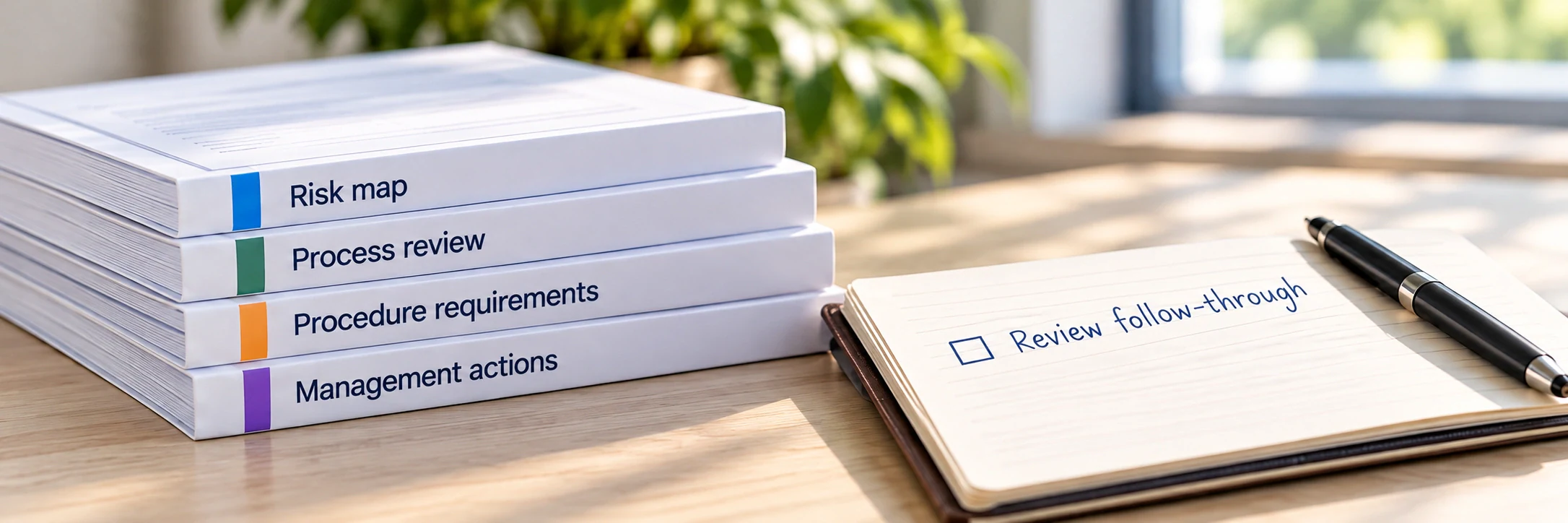
Possible process findings, risk maps and procedure or control requirements can guide an agreed response. Reviewing follow-through helps managers see which actions remain open. Reporting, tracking and dashboards support understanding exceptions when connected to a real management decision.
Relevant support
Explore the support most relevant to the question in front of you.
Different expertise.
A more connected
way forward.

Administrative process mapping, operating procedures and handoff responsibilities.
Explore Strategy

Financial information, valuation, diligence, restructuring and transaction questions.
Explore FinanceLet’s talk
Share the administrative or support process, the functions involved and the management decision that needs attention.
Sites, available non-patient records and the point where responsibility becomes unclear can help frame the conversation. Begin with what you know.

Please do not share patient information.
Start a conversation