01
Local need
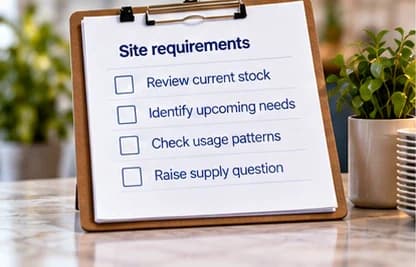
Identify the purchasing or stock question affecting the site routine.

Restaurants & hospitality
Purchasing, workforce records and site routines connect service locations with central teams. Clear responsibilities make local exceptions visible to the people able to respond.
Standards and local practice
A location may follow a different routine, receive different supplier inputs or work with unclear responsibilities. Understand the evidence before deciding whether the response belongs locally, centrally or with both.

Interpret the standard, adapt it to local conditions and carry out the day-to-day routine.
Provides goods and services that can affect how the routine is carried out.
Sets the standard, enables implementation and reviews information across locations.

Decision owner. Evidence from operations, suppliers, staff and reporting helps identify who can respond: locally, centrally or with both. Not every location needs the same response.

Purchasing and supplies
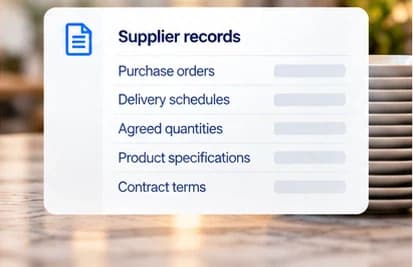
Purchasing records, supplier commitments and stock information help explain what a service location needs and which supply action remains open.
Stock and vendor priorities connect the evidence with the operating decision.

Identify the purchasing or stock question affecting the site routine.
Read sourcing records and agreed commitments together.
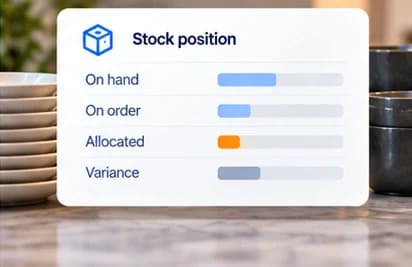
Verify stock information and reconcile discrepancies where relevant.
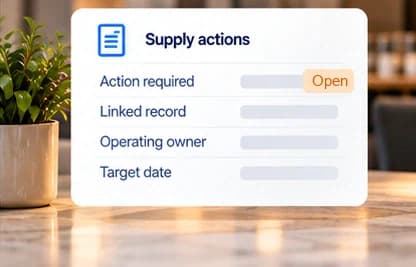
Connect an unresolved supply action with the responsible operating owner.
Workforce & recurring responsibilities
Staffing, payroll and recurring site responsibilities need current records and a clear view of who maintains them and who responds to an exception.

Useful records and responsibilities are shaped around the location and the agreed scope.


Is the document or information in place?

Does it reflect current local practice?

Is it clear who maintains it and who responds?

Does it reach the people who need to act?

Maintain the site information and raise the exception.

Connect local records with the central view.

Use the update and clarify the response.
Local and central response
A site exception needs its supporting evidence, the local responsibility and the central decision it requires. Reporting should make the next action and follow-through visible.

Understand what needs a response.
Record what happened and identify the appropriate next local action.


Identify the commitment or support question that needs central authority.

Make the decision needed, action open, teams to inform, records to update and review follow-through visible.


A focused response
Site-process findings can frame the operating question.
Stock and vendor priorities may support the responsible response.
Workforce controls can clarify records and responsibilities.
Reporting routines can keep the operating question visible.
Practical workflow, process improvement or applied learning follows the operating question.
Relevant support
Explore the support relevant to your purchasing, workforce or site-routine question.


Workforce records, payroll and recurring site support.
Explore Workforce
Process review, consistent routines and operating responsibilities.
Explore Strategy
Purchasing, supplier commitments and follow-through.
Explore Operations

Restaurants & hospitality
Share the affected location, the purchasing, workforce or site-routine concern and the decision that needs attention.
Current standards, available business records and the local or central responsibilities can help frame the conversation. Begin with what you know.
Start a conversation